The Secret World of Micro Bubbles
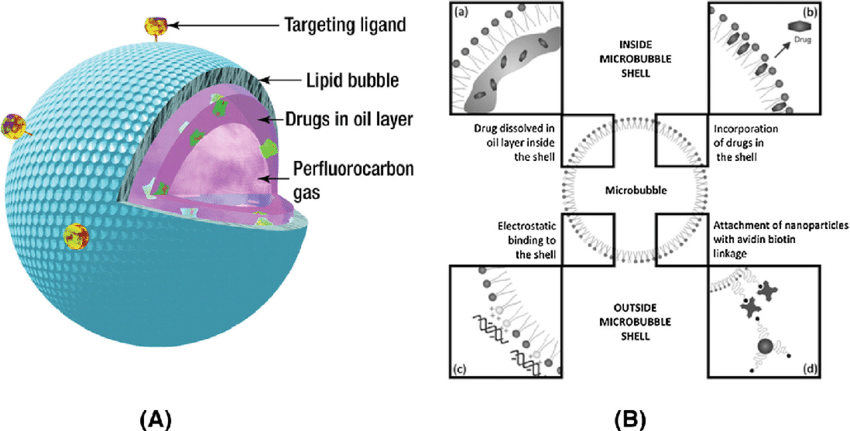
Micro bubbles might sound ordinary, but these microscopic powerhouses possess extraordinary capabilities in medical science.
These tiny bubbles are smaller than red blood cells, measuring less than 10 μm in diameter—about 1/100th of a human hair.
Their minuscule size hasn’t stopped them from becoming instrumental in revolutionizing medical imaging and treatment.
The science behind microbubbles reveals tiny spheres with a gas core wrapped in a protective shell made of proteins, lipids, or polymers. These remarkable structures work as “theranostic” agents that provide contrast for diagnostic imaging and serve as targeted drug delivery vehicles.
Europe’s most popular ultrasound contrast agent, SonoVue, contains microbubbles filled with sulfur hexafluoride—a non-toxic gas that patients fully exhale through their lungs within minutes. Scientists can break these bubbles open by increasing ultrasound power, which releases drugs exactly where needed. This precision makes microbubbles an invaluable tool in modern medicine.
Micro bubbles are different from their larger cousins. They have special properties that make them powerful tools in medicine and environmental applications. Their size, shell composition, and gas core give them these remarkable characteristics.
Size comparison: microbubble vs regular air bubble
These tiny bubbles measure just 1 to 10 μm in diameter—about the same size as red blood cells. Regular air bubbles or macrobubbles are thousands of times bigger. The size difference creates amazing effects. A milliliter of 100 nm diameter bubbles has 1000 times more surface area (240 m²) than the same volume of 0.1 mm bubbles (0.24 m²). Regular bubbles quickly float up and pop at the water’s surface. These microbubbles act differently—they float up slowly and go through “shrinking collapse” instead of bursting.
Shell materials: lipids, proteins, polymers
Microbubbles have three main types of protective shells:
Lipid shells (3-5 nm thick) are a great match for elasticity and acoustic response
Protein shells (15-150 nm thick), often made with bovine serum albumin (BSA), give strong stability
Polymer shells (50-500 nm thick) last longer and can carry more drugs
The shell type shapes how each microbubble behaves. Bubbles with longer lipid chains become less round, while shorter chains create more perfect spheres. Saturated lipids also stay stable longer than unsaturated ones.
Gas core and stability in the bloodstream
The gas inside these bubbles is vital for how they work and last. The first microbubbles used air, which dissolved fast in blood. Today’s versions use gasses that don’t dissolve easily, like perfluorocarbons or sulfur hexafluoride. These gasses help bubbles last much longer in the body.
The Young-Laplace equation explains how these bubbles stay stable. Stability happens when pressures on both sides of the interface balance out. The gas core pushes outward while the liquid and shell push inward. The bubble keeps its shape when these forces balance.
Shell thickness affects which ultrasound frequencies work best—thicker shells need higher frequencies to create cavitation. Doctors use this feature to control medical treatments precisely. These bubbles are now powerful tools for both imaging and therapy.